

A semi-basement in Kyiv, one iPad, and 90% of the global market. The story of how friends rejected a company that became a worldwide phenomenon. This is one of the most expensive mistakes in iGaming history.
A Scene Nobody Caught on Camera
February 2020. London. ExCeL—an exhibition center the size of a small airport, packed with stands, banners, handshakes, and money. ICE was underway, known as the world’s largest iGaming trade show. Thousands of companies were represented, hundreds of millions of dollars were being exchanged in meeting rooms, and delegations moved with personalized badges and pre-scheduled meeting slots.
Two men stepped into this flow without a stand, sponsor badges, or a single meeting on their calendar—armed with just one iPad and an idea. David Natroshvili, the founder of Spribe and a former government minister, and his partner Niko systematically approached other people’s stands, walking up to strangers and smiling.
"Hello, my name is David. Have you seen this game?"

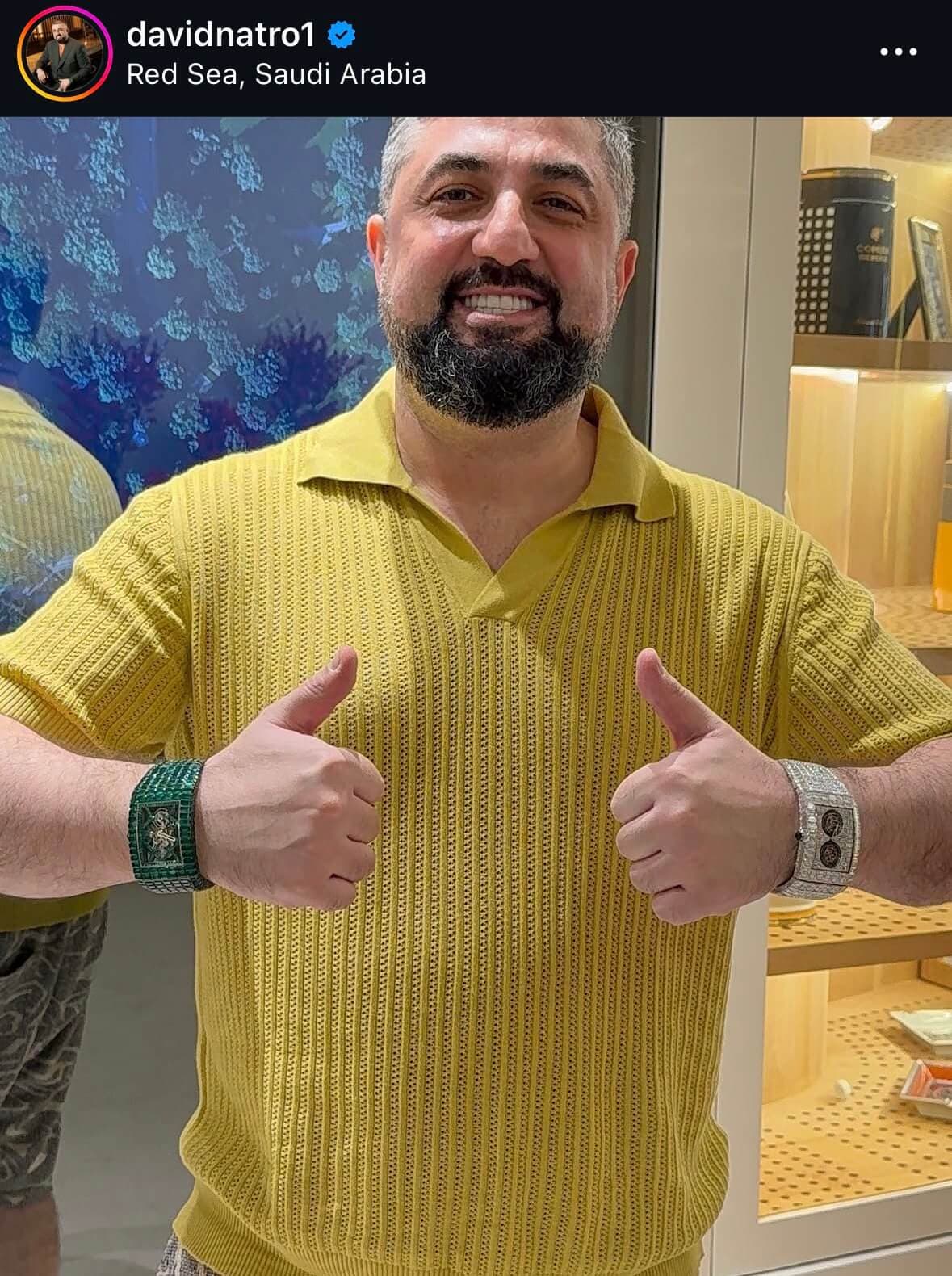

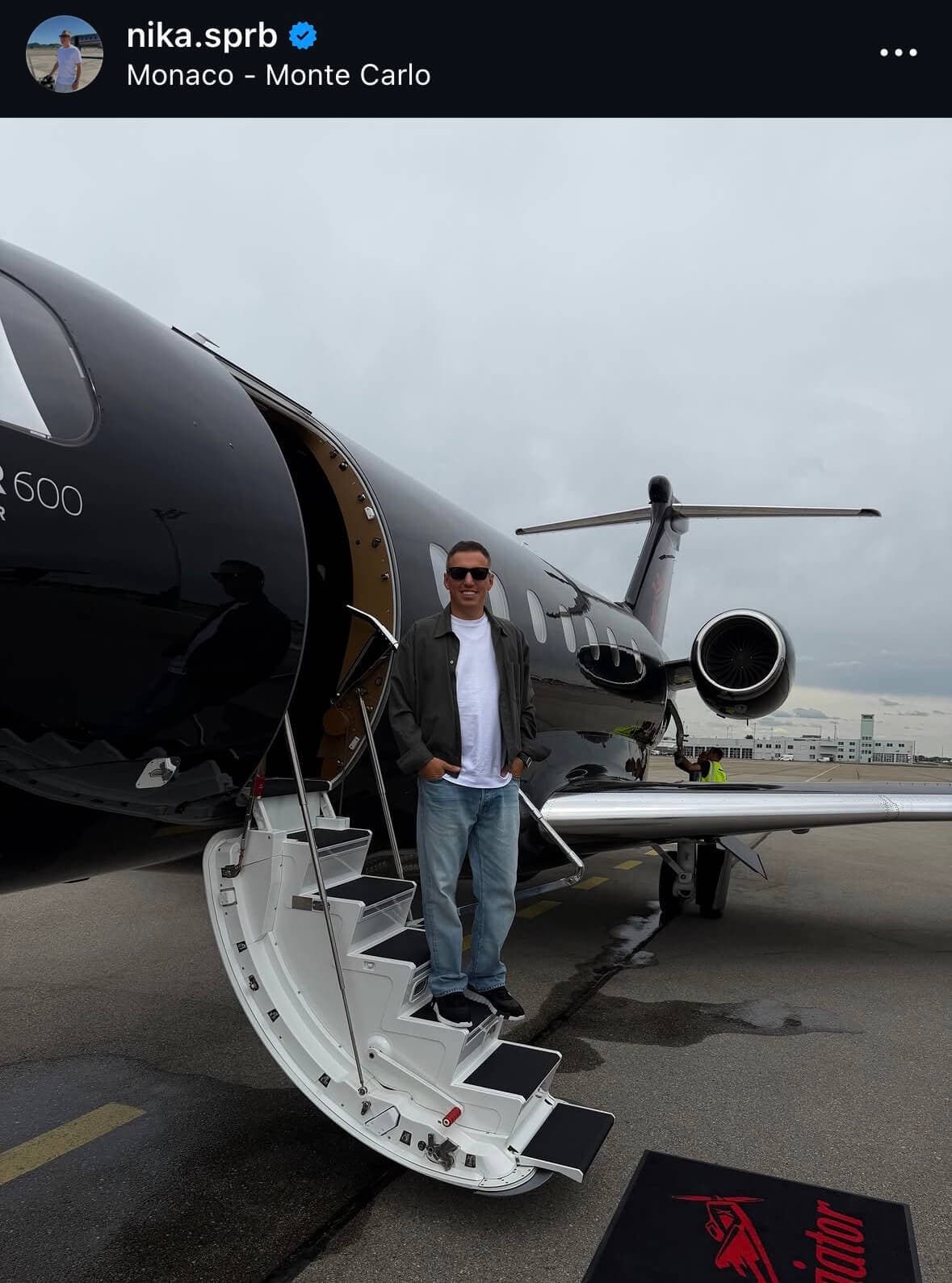
(All images used in this article are taken from open sources. The rights to the graphic materials belong to their respective authors.)
He unlocked the iPad to reveal Aviator, a plane flying across the screen while a multiplier grew every second. Many laughed. Some told them to go away. Most simply didn't understand what they had just been shown.
By that time, Aviator had already been live on the market for over a year, operating quietly, without any venture capital. It was already certified and had found its first operators, but the market failed to recognize a future iGaming giant in this small company.
Today, tens of millions of people play Aviator every month. The monthly betting volume exceeds €14B, and their market share in crash games stands at 90–92%.
The story of how this became possible didn't start in London — it began in a semi-basement in Kyiv.

A Semi-Basement, $800 Rent, and 35-Hryvnia Croissants
Spribe was founded in August 2018. The team worked out of a semi-basement office in Kyiv—the kind of space in Eastern Europe typically rented by small accounting firms, delivery services, and companies that hadn't yet earned enough for something decent.
In September, the first major signal arrived: a partnership with Adjarabet, the largest online casino in Georgia. For those who knew how to read market signals, this was significant, but it still wasn't enough to convince investors.
David Natroshvili cold-called acquaintances, attended meetings, and pitched his vision. The ask was modest: $150,000 for 15% of Spribe. It wasn't a Series A or a high-profile round with prominent VC funds—just money from people who knew him.
"We were raising a round. $150,000 for 15% of Spribe. We went around, but no one would give us the money."
As David himself put it:
"Kyiv was a vibrant city back then. Industry people would come over, hang out, party."
Some of them—potential investors—would meet with David, listen to the pitch, and then head to a party. The next morning, they all told him the same thing:
"Well, David, it needs more work. Push it a bit further. Call me in three months. The product needs some polishing."
"We were sitting in that semi-basement in Kyiv back then," Natroshvili recalled. "In the beginning, we had no money. We paid $800 for the office. We lived on Lviv croissants every day—they cost 35 hryvnias—and bought cookies. There were zero salaries. Zero. The guys would ask, but I told them: 'You have to believe me.' Today, all six people who started with me are millionaires."
Nobody gave them the money.
"Thank God they didn't," he says today without bitterness, carrying the calm irony of a man who knows how the story ends.
"Imagine if we had sold 15% of Spribe for $150k back then."
He didn't say exactly how much that 15% is worth today, but the figure is measured in hundreds of millions of dollars.
January 2019: Aviator Hits the Market
To fully grasp the scale of the event, you need to understand the context of how the iGaming industry and the provider ecosystem operate.
While the fruitless negotiations with investors were ongoing, the most important work was happening internally. In January 2019, Spribe launched Aviator—without loud announcements, a marketing budget, or external investors.
The mechanics were fundamentally new for the market. This wasn't a slot where a solo player spins a reel. Aviator was a real-time multiplayer game: all players saw the same field, placed bets together, watched the multiplier grow every second, and each decided for themselves when to cash out before the plane flew away. It was simple, instant, and addictive.
In May of the same year, the first batch of games from Turbo Games—a parallel project Spribe was developing simultaneously—was released. In November, Aviator was certified. The company built its foundation step by step, bootstrapping without external capital.
It was at that point, when the product was already live and finding its audience, that it came time to go to London.
The iPad as a Pitch Deck
Before traveling to London, David Natroshvili tried to set up meetings to present Aviator. He sent dozens of LinkedIn messages to operators, platforms, and industry representatives, but most simply ignored him. Some declined politely; nobody wanted to waste time on a small, unknown company without a brand name, a stand, or tier-1 partners.
“We didn’t understand anything about the industry. I had no idea what an aggregator or a platform was, or how things worked at all. We just knew there was a big exhibition in London in February, and we had to fly there.”
David and Niko flew to London carrying only a single iPad. The strategy was as straightforward as the game itself: just walk up to people at their stands without appointments or introductions through intermediaries, approach them, and pitch.
"I would say: 'Hello, my name is David. Have you seen this game?' I’d open the iPad and just show it to everyone, just like that."
He was 42 years old, with experience as a government minister in Georgia and running his own business. While anyone else might have considered it beneath their dignity to walk around other people's stands with a tablet in hand, he didn't.
"I didn't care. I just walked up to them."
A lot of people laughed and some told them to leave, but a few actually looked.
"By the end of the second day, only one company welcomed us—EveryMatrix. We were invited to their office, and their manager said: 'I think there is something to this game.' Then they sent over a massive contract. At the time, we didn't have a lawyer, just one sales manager, and he asked: 'Are we going to read the contract?' I said: 'Read what?! Sign it.'"
"The document had one interesting clause: 'If you fail to send a renewal notice on time, the contract extends perpetually.' We missed that deadline. Now we have a lifetime contract with EveryMatrix. Despite the strict terms, the partnership remains highly profitable."
That is exactly how Aviator entered the global iGaming industry: through the hands of the founder and a single iPad at the planet's largest trade show.
In December 2020, Spribe secured licenses from the MGA and UKGC—two of the most reputable iGaming regulators in global gaming. The company that had been denied $150,000 was now fully compliant and operating in the most demanding jurisdictions in the world.
Why No One Saw What Was Right in Front of Them
It’s easy to criticize the people who laughed at the ICE stands, and it’s even easier to criticize those who said "call me in three months" in Kyiv. However, their reactions were entirely rational by the standards of the time.
In 2018–2019, crash games did not exist as an established genre. There was no retention data, there were no case studies, and there wasn't even a vocabulary to describe what Aviator was. To operators accustomed to slots with clear RTP metrics and predictable margins, this looked like an open-ended experiment.
The investment mindset of the time evaluated only what it could see. And what it saw was two guys with an iPad, a product with no distribution history, and a semi-basement office in Kyiv. Standard filters provided standard rejections.
Corporate Filters and the Invisible Killers of Ideas
The story of Spribe was not just the story of one company; it served as a stark reminder of how many potentially great projects never reach the market.
The people who met with David in Kyiv were mostly his personal network, not professional venture capitalists. But the psychology behind their refusal perfectly mirrors a well-known pattern for anyone who has studied startup history: an unconventional product almost always fails against standard evaluation criteria.
In the professional VC and B2B world, this works even more ruthlessly and far less visibly. When there are multiple layers between an opportunity and a decision—analysts, junior partners, an investment committee with criteria written for the last cycle—a product lacking a predefined category gets filtered out first. It is rejected not because it’s bad, but because it’s incomprehensible. In the corporate dictionary, "incomprehensible" means "carries unquantifiable risk," and unquantifiable risk is career suicide for the manager who approves it.
There is a high probability that many pitches similar to Spribe’s never even reached the actual decision-makers. A mid-level manager looked at a deck from a semi-basement startup in a niche, highly regulated segment and decided to pass. They did so not because they were incompetent, but because their job isn't to find the next Aviator. Their job is to avoid obvious compliance mistakes and hit their KPIs. These are different tasks requiring different mindsets, and the corporate hierarchy is optimized for the latter.
The Metrics That Turn a Story Into a Document
The current scale of the game cannot be described without hard numbers.
All historical metrics and quotes in this article are based on direct statements from a series of interviews on the Точка G and The Riddick Level YouTube channels with Spribe’s founder, David Natroshvili.
"We currently have 50 million monthly active players," he said while summarizing interim results.
But Aviator's growth continues exponentially. As of late May 2026, according to official data on Spribe's Instagram page, the game's audience has reached 77 million monthly active users (MAU). This is more than the combined population of several major European countries.
With the monthly betting volume exceeding €14B
This performance is comparable to the annual GGR of some massive publicly traded iGaming companies.
Every minute, 400,000 bets are placed in Aviator. The multiplayer architecture—where all players see a single field in real-time—creates technical demands that have inherently become a formidable barrier to entry for competitors. Copying the mechanics is easy, but sustaining 400,000 bets per minute on a single instance is an entirely different engineering challenge.
"In crash games, it's just Aviator, because we hold 90% of the market."
"To be precise—92%. In Africa, we are number one. In Brazil, number one. In India, number one. In the CIS, number one."
The company, founded in August 2018 with an office in a semi-basement, recently celebrated its eighth anniversary. Today, Spribe employs over 400 people.
The Cost of Disbelief
In behavioral economics, this is known as omission bias: a realized loss is felt sharply and specifically, while a missed opportunity is almost never felt at all. Nobody keeps a ledger of the deals they passed on, and nobody calculates alternative ROI.
The most expensive investment mistakes remain invisible, and that is exactly why they are repeated over and over again. This is a structural flaw of the market: great companies almost never look great at the beginning of their journey.
How Many Spribes We Never Got to See
Spribe survived. They bootstrapped their way to the point where the product began speaking for itself.
But this is an anomaly. Hundreds, perhaps thousands of teams with comparable ideas failed—not because the idea was weaker, but because at a critical moment they lacked a relatively small amount of funding to reach the next proof of concept. Their projects stalled because the pitch deck landed on the wrong desk, or because the product existed in the whitespace between categories—too new to get funded, yet too viable to die.
A true revolution almost never looks like a revolution when it starts. At best, it looks like "too risky" and "call me in three months." At worst, it’s labeled "just another project" or "nobody needs this."
Conclusion
The story of Spribe is one of the rare few that ended with global market dominance. From a semi-basement in Kyiv to 77 million players. From $150,000 for 15% of a company no one believed in, to a monthly betting volume exceeding €14B. From one iPad at someone else's stand to a 90% share of the crash games market.
And somewhere this year—in London, Warsaw, Kyiv, or Limassol—a person with an iPad is taking a step forward.
They are walking up to your stand.
And in that moment, the most expensive mistake in the industry is about to be made all over again.
The future looks like noise. And it walks right past you.
